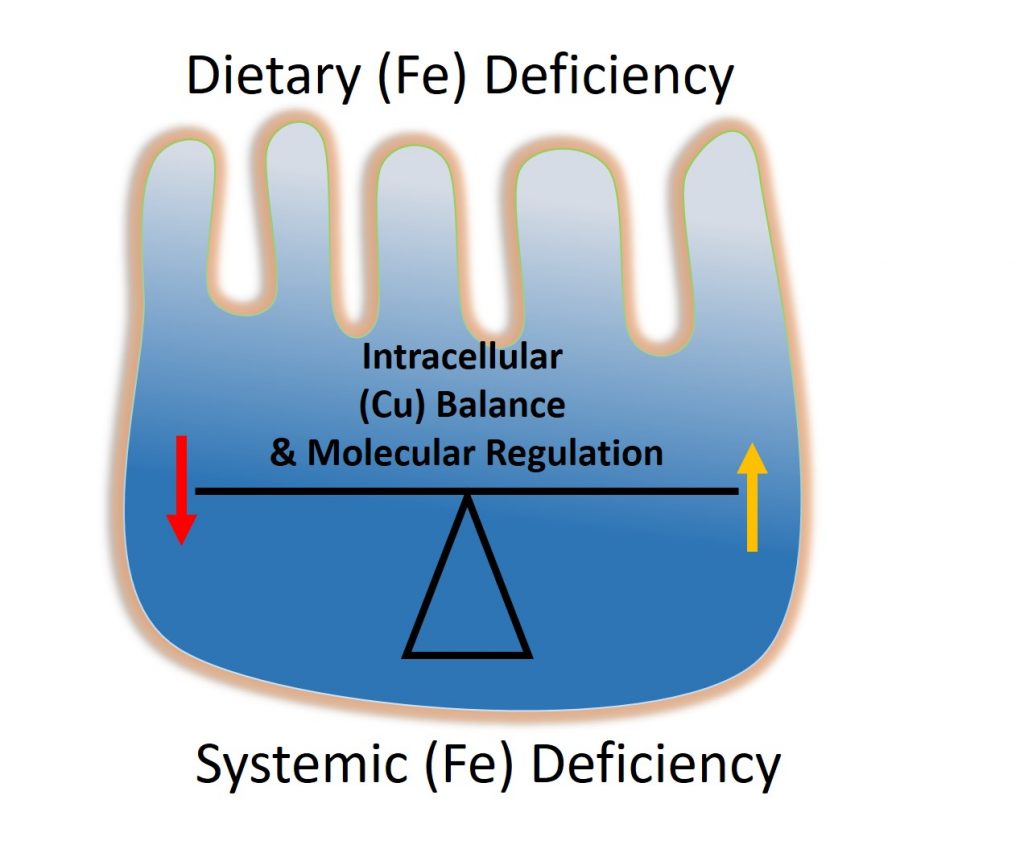
Iron is the main component of hemoglobin molecules that play a crucial role on carrying oxygen to tissues. Moreover, iron is necessary for cell division, differentiation, and it involves in immune response against pathogenic microorganisms. Unlike many other nutrients, humans do not have an active excretory mechanism to reduce the excess iron in the body. Thus, iron homeostasis in mammalians is tightly controlled by duodenal iron absorption via molecular and genetic mechanisms. Less dietary iron consumption or inefficient enterocyte activity on iron absorption increase the risk for iron deficient anemia. Iron deficiency is the most common nutrient deficiency disorder in world (more than a third of the world’s population).
Iron deficiency leads duodenum to extend the cell surface area and induce iron regulating gene expressions to absorb more iron from diet. Recent studies indicates that iron deficiency causes elevated copper level in enterocyte cells. However, physiologic reason of this is still questionable. It is promising that the copper is a compensatory factor to anemia and more studies are needed.
Our current research focuses on how dietary and blood copper influences the intestinal iron metabolism during iron deficiency.
This project was funded by The Scientific and Technological Research Council of Turkey (TUBITAK)